The next challenge isn’t innovation. It’s adoption.
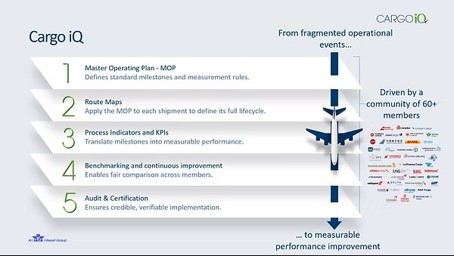
Despite many claims to the contrary, air cargo has never lacked innovation. Over the past decade, the industry has introduced digital booking platforms, eAWBs, real-time visibility tools, predictive analytics, API connectivity, Artificial Intelligence, and, most recently, IATA’s ONE Record standard. Almost every major conference features discussions about the next technological breakthrough, while airlines, freight forwarders, and technology providers continue to invest heavily in digital transformation. However, the challenge is no longer innovation – it is adoption. Illustration: Courtesy of Cargo iQ Developing new technologies is only the first step. Their real value is unlocked only when thousands of organizations across the global supply chain adopt common standards, exchange data consistently, and integrate new processes into daily operations. That is precisely why Cargo iQ’s latest Board restructuring deserves attention. At first glance, the election of three new Board members and the re-election of four existing members appears to be routine governance. However, it reflects a much broader shift taking place across the industry. Cargo iQ is increasingly positioning itself not only as a developer of quality standards, but as an organization focused on driving their implementation across the global air cargo community. From developing standards to driving adoption For many years, Cargo iQ has been synonymous with shipment quality management. Its operational milestones and performance measurements have helped airlines, freight forwarders, and ground handlers monitor service quality using a common framework. Today, more than 80 members, including airlines, airports, handlers, freight forwarders, and technology providers, use Cargo iQ standards to improve operational consistency across international supply chains. Yet the organization’s priorities are evolving. Rather than concentrating solely on developing new standards, Cargo iQ is now placing increasing emphasis on implementation. The rollout of its Tiers Implementation System gives members a structured pathway towards adopting Cargo iQ processes, while a new data-driven audit program measures how consistently those standards are being applied across participating organizations. It is a subtle but important shift as standards only create value when they become operational reality. Digital transformation requires common rules The same pattern can be seen across almost every major digital initiative in air cargo. Whether discussing ONE Record, AI-supported decision-making, API connectivity, or end-to-end shipment visibility, the underlying requirement remains remarkably similar: everyone must speak the same digital language. Technology alone cannot solve fragmentation. An AI application is only as reliable as the operational data it receives. ONE Record only delivers its full potential if airlines, freight forwarders, and technology providers exchange information using the same data model. Visibility platforms can only provide end-to-end transparency when every participant contributes standardized data. The industry’s biggest obstacle is therefore no longer technical capability. It is collective implementation. Collaboration is becoming operational infrastructure This reality is also changing how organizations collaborate. Historically, many digital initiatives were driven by individual companies seeking competitive advantage through proprietary technology. Today, competitive differentiation increasingly depends on how effectively businesses integrate into shared digital ecosystems. This shift makes industry organizations such as Cargo iQ increasingly relevant. Its current priorities illustrate this evolution: while expanding the adoption of its quality standards, the organization is at the same time working on supporting API-driven processes, promoting the integration of ONE Record, improving station route maps, and strengthening standards for road feeder services. Each initiative addresses a different operational challenge, yet all share a common objective: creating greater consistency across the air cargo supply chain. The newly structured Board reflects that ambition. With broader representation from airlines, freight forwarders, and ground handling companies, strategic priorities can be developed from the perspective of the entire logistics chain rather than a single stakeholder group. In an industry where shipment quality depends on every handover, this kind of balanced representation becomes increasingly important. Adoption will define the next phase of digitalization Air cargo has reached an interesting point in its digital transformation. Most of the technologies needed to build a more connected, transparent and efficient industry already exist. The focus is gradually shifting away from inventing new solutions toward embedding existing ones into everyday operations. This transition may ultimately prove more challenging than innovation itself. Im