Russia Says Its HIV Rates Are Falling. Experts Aren’t So Sure.
Experts warn that official statistics conceal a public health crisis that has only worsened amid the Ukraine war.
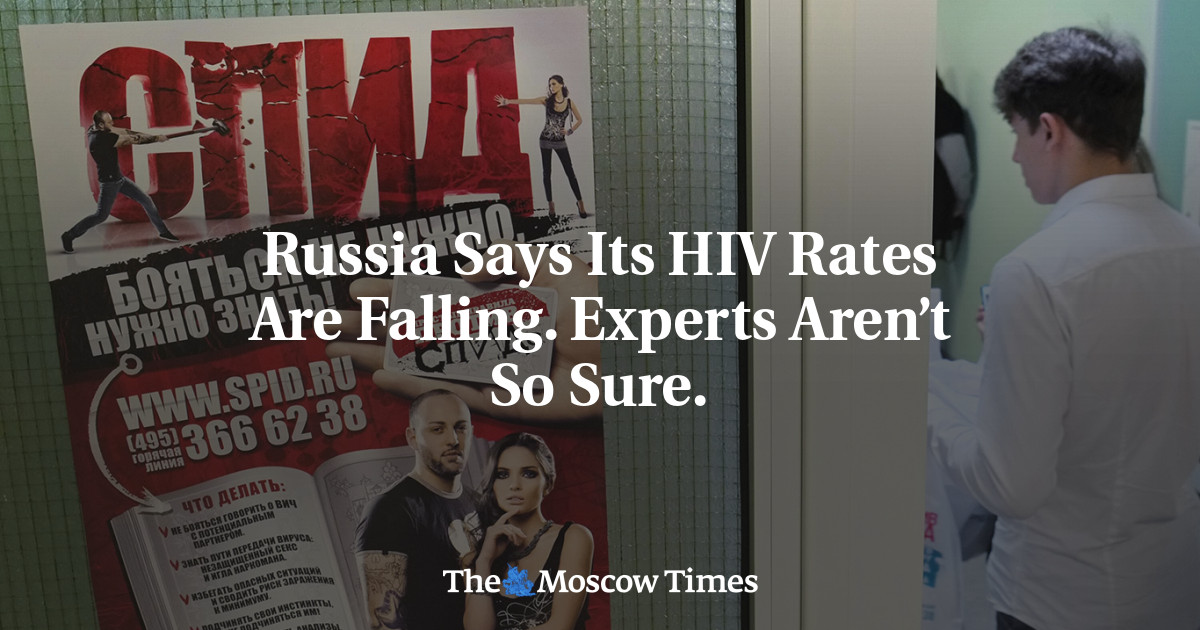
Four years ago, while hospitalized with Covid-19, St. Petersburg singer Ksenia Aleksandrova was unexpectedly diagnosed with HIV. Known by her stage name Neksusha, the 23-year-old Aleksandrova has built a devoted online following, with around 90,000 subscribers on YouTube and more than 213,000 monthly listeners on Spotify. Despite the persistent stigma that surrounds HIV, she decided to publicly disclose her diagnosis in an effort to raise awareness about the illness. “I’m not a drug user, I’m not a sex worker. It just happened, I’ve been in a monogamous relationship for a year and my partner is HIV-negative,” she told journalists at the time. “I realized I was tired of staying silent. I have a platform and I want to use my story to help other people,” she said . Since then, Neksusha has openly discussed HIV, using her social media to educate her audience in Russia. Neksusha is one of tens of thousands of people in Russia who live with HIV, the virus that causes AIDS. In 2026, Russia said that new infection rates had reached a historic low. But experts say the official statistics conceal a public health crisis that was already serious long before the full-scale invasion of Ukraine — and has only worsened amid the war and growing pressure on vulnerable groups. Neksusha. @etoneksusha / Telegram Statistics Russia ranked fifth globally by the share of new HIV infections in 2021, accounting for 3.9% of all new cases worldwide, according to the United Nations Programme on HIV/AIDS. No updated global country ranking has been published for more recent years. Assessing the current situation within Russia is also complicated because official sources report different figures. Nationwide data on HIV-related mortality are also no longer readily available after Russia stopped publishing a range of demographic statistics. The Health Ministry said in June that Russia’s HIV incidence had halved since 2016 and placed the number of people with HIV at 931,000. In 2016, the ministry reported 860,000 registered HIV cases, although experts suggested at the time that the real number could have been between 1.5 and 2 million. Consumer protection watchdog Rospotrebnadzor put that figure at 1.23 million as of December 2025. Other estimates suggested 1.25 million HIV positive patients in 2025. Experts say that Russia’s approach to testing may be obscuring the true scale of the epidemic. “Russia has always been a country where a lot of HIV testing was carried out, but the problem is that investments in testing were often allocated incorrectly. A large number of people were tested through the general healthcare system — for example, patients before hospitalization and people visiting outpatient clinics,” said Evgeny Pisemsky, editor-in-chief of the queer media outlet Parni Plus. “To control the epidemic, it is critical to test precisely those groups where the risk of HIV transmission is higher: gay and bisexual men, transgender people, people who use drugs and sex workers,” Pisemsky told The Moscow Times. “These are exactly the groups that authorities are failing to work with properly.” HIV Testing at a Clinic in Moscow. Moskva News Agency Official statistics on new HIV cases therefore cannot be fully trusted, he said. “We simply do not know what is happening now among the groups where the epidemic typically spreads most actively and where, in a functioning public health system, prevention efforts should be focused,” he said. Pressure on HIV organizations Many organizations providing HIV prevention and support services to vulnerable groups have been pushed out of Russia or pressured by the authorities. Some were designated “foreign agents” due to Western funding, while others were simply banned. Even before the full-scale war against Ukraine, “HIV had already become a political issue,” Pisemsky said. His HIV-focused organization Phoenix Plus had worked with people who use drugs and members of the LGBTQ+ community for 14 years before it was forced to close in 2020 after Russian authorities designated it a “foreign agent.” Last year, Russia designated the Elton John AIDS Foundation , one of the world’s largest charities fighting HIV and AIDS, and the Eurasian Coalition on Health, Rights, Gender and Sexual Diversity as “undesirable organizations.” The designation prohibits other groups operating inside the country from working with them or engaging with their activities. The crackdown on foreign initiatives and increased financial pressure have also forced Russian HIV organizations to scale back their work, said Maxim Malyshev, a former social work coordinator at the Andrey Rylkov Foundation, which helped people with drug dependence and worked on HIV prevention. “Many foundations and grassroots initiatives were funded through foreign grants — now it’s almost impossible to get them as many foreign organizations were banned in Russia. The only funding available to us is domestic,” which is very limited, Malyshev said. The Andrey Rylkov Founda