Irkutsk Maternity Hospital Screens Patients for Plague After Lab Worker’s Death
A local blogger said that staff at the Irkutsk City Perinatal Center gave her a “Checklist for Suspected Plague” when she arrived for an examination.
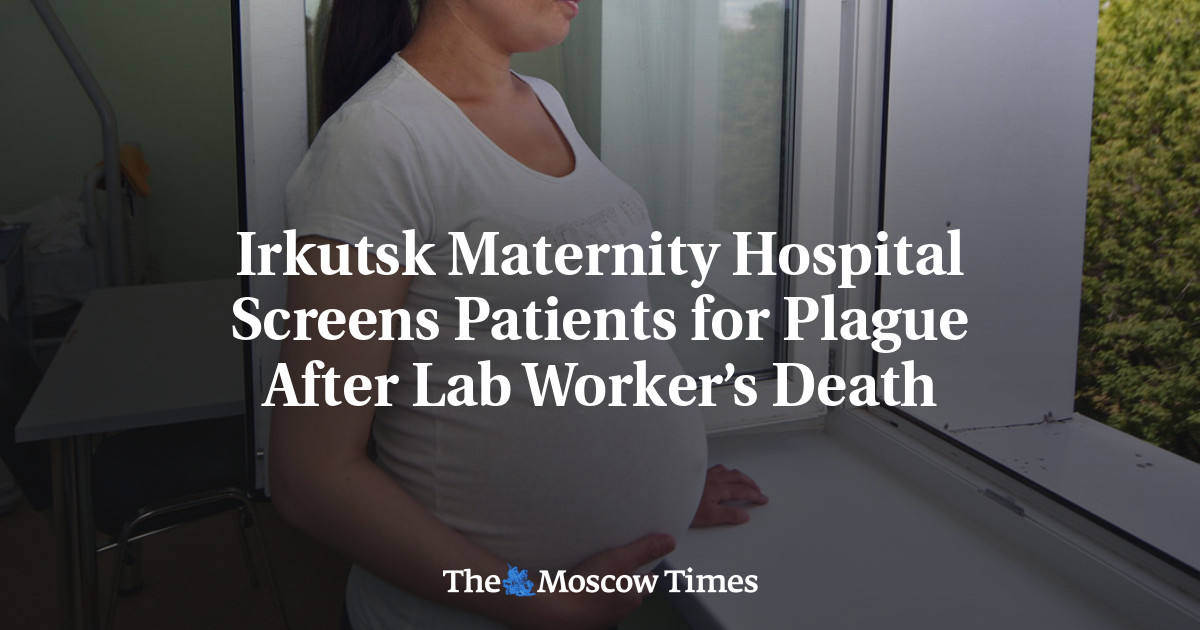
A maternity hospital in Siberia’s Irkutsk region has started screening pregnant patients for possible plague exposure and restricting visitors following the death of a local anti-plague institute employee, the independent outlet Lyudi Baikala (People of Baikal) reported Monday. Darya Shipilova, a 28-year-old employee of the Irkutsk Anti-Plague Institute, died last week after being hospitalized with pneumonia symptoms in the nearby town of Shelekhov. Her death has fueled fears of a possible plague outbreak, though authorities have not publicly confirmed that she had the disease. Blogger Ulyana Gavryunina told the outlet that staff at the Irkutsk City Perinatal Center gave her a “Checklist for Suspected Plague” when she arrived for an examination on Oct. 5. The questionnaire asked about symptoms and contact with sick people or recent arrivals from abroad. Gavryunina said the center has barred entry to everyone except pregnant patients since Friday and that staff checked her temperature and asked her to show her tongue when she arrived. Staff reportedly cited unconfirmed information about an unidentified infection as the reason for the restrictions. The center also introduced a mask requirement and temporarily barred partners from attending births, she added. Unconfirmed reports have suggested Shipilova contracted plague during a work trip to the neighboring republic of Buryatia or after accidentally breaking a test tube containing the plague bacterium in a laboratory. Neither account has been officially confirmed. The Shelekhov hospital was subsequently placed under quarantine and 189 people who had been in contact with Shipilova were placed under medical observation, according to earlier reports. Kremlin spokesman Dmitry Peskov on Monday urged Russians to disregard rumors of a possible plague outbreak and rely on statements from the consumer protection and public health watchdog Rospotrebnadzor. The agency said the Irkutsk region’s public health situation remained “stable” following an investigation. Kazakhstan, Kyrgyzstan and Uzbekistan have stepped up precautions amid the reports. U.S. President Donald Trump’s administration is also monitoring information about the suspected case. The World Health Organization said Tuesday that Russian authorities had identified Shipilova’s contacts and that none were showing symptoms. It said it had requested more information from Russia about her death. Plague is caused by the bacterium Yersinia pestis, which circulates among small mammals and their fleas. According to the World Health Organization, people can become infected through flea bites or contact with infected animals or tissues. The most common form, bubonic plague, causes painful, swollen lymph nodes and rarely spreads between people. Pneumonic plague affects the lungs and can spread through respiratory droplets during close contact. Both forms can be treated with antibiotics, though early treatment is critical. This article was translated with the help of artificial intelligence and was reviewed by a Moscow Times editor before publication. Learn more about our newsroom's AI policy here . Read this article in Russian at The Moscow Times' Russian service. A Message from The Moscow Times: Dear readers, We are facing unprecedented challenges. Russia's Prosecutor General's Office has designated The Moscow Times as an "undesirable" organization, criminalizing our work and putting our staff at risk of prosecution. This follows our earlier unjust labeling as a "foreign agent." These actions are direct attempts to silence independent journalism in Russia. The authorities claim our work "discredits the decisions of the Russian leadership." We see things differently: we strive to provide accurate, unbiased reporting on Russia. We, the journalists of The Moscow Times, refuse to be silenced. But to continue our work, we need your help . Your support, no matter how small, makes a world of difference. If you can, please support us monthly starting from just $ 2. It's quick to set up, and every contribution makes a significant impact. By supporting The Moscow Times, you're defending open, independent journalism in the face of repression. Thank you for standing with us. Once Monthly Annual Continue Not ready to support today? Remind me later .