Kenya awarded contract for disputed oil refinery
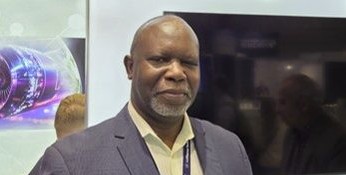
The Nigerian business tycoon, Aliko Dangote, has decided to set up a USD 17 billion oil refinery in Lamu, Kenya, following months of speculation about whether the project will go ahead in Kenya, Uganda or Tanzania. The initiative is supported by the East African aviation industry since it enhances the supply of Jet A-1 fuel by reducing the dependence on imported fuels from the Middle East. In contrast, environmental groups oppose the Lamu plans. Greenpeace Africa warned that if the oil refinery is realized, it could be detrimental to the fragile coastal ecology in Lamu (an island located off the country’s Indian Ocean coast) and continue to make Kenya dependent on fossil fuels. CargoForwarder Global (CFG) spoke with Bernard O. Onguso (BO), Kenya-based expert in SAF & Net-Zero strategic developments, about this controversial issue. Kenya’s upcoming oil refinery presents a multi-year opportunity for project cargo and heavy-lift logistics, Bernard Onguso – photo: CFG/hs CFG: Bernard, according to plans, the facility will refine at least 700,000 barrels of crude oil per day and be completed within three years. It is said to come from local sources in East Africa. What are they? BO: The feedstock will draw from a multi-basin regional framework. Domestically, it integrates Kenya’s onshore oil discoveries from the Turkana basin, alongside pipeline-linked crude pooling from neighboring regional producers and emerging fields across East and Southern Africa. Given a single-train capacity of 700,000 barrels per day, the project is designed to aggregate regional upstream output to achieve economies of scale that smaller domestic facilities could not achieve. CFG: Once the refinery is operational, aircraft at Nairobi, Entebbe, or Addis Ababa airport will be fueled with Jet A-1 stemming from regional sources. Doesn’t this prolong dependence on an energy that is becoming obsolete in the mid-term and is subject to escalating taxes? To put it another way, wouldn’t it make more sense for the Dangote Group to focus on SAF production right away? BO: An immediate full transition to Sustainable Aviation Fuel (SAF) is not operationally viable with global and regional mandates currently scaling up from baseline blending floors of around 2%. East Africa’s immediate priority is meeting commercial demand, reducing logistics costs, and stabilizing foreign exchange reserves. Establishing baseline regional energy independence and reliable fuel supply chains is necessary before scaling a mature SAF ecosystem. Furthermore, the capital infrastructure, hydrogen networks, and processing units built for this facility provide the technical foundation required to scale co-processed and alternative fuels in the future. CFG: What does the African Airlines Association (AFRAA) have to say about Dangote’s plans in Lamu? After all, its mission statement includes this commitment: We support the Carbon Offsetting and Reduction Scheme (CORSIA) […] BO: AFRAA and regional carriers view these developments pragmatically. While bound by CORSIA compliance and long-term net-zero targets, airlines currently face high jet fuel premiums from importing refined products. A local, high-capacity refinery compresses supply chains, reduces foreign exchange pressures, and stabilizes fuel pricing for regional carriers. Addressing baseline fuel costs and foreign exchange management, provides capital that carriers can subsequently direct toward long-term sustainability initiatives. CFG: What is known about the domestic distribution of crude oil and jet fuel? New routes will likely need to be developed. BO: This project involves significant multi-modal restructuring. It utilizes the LAPSSET corridor, connecting new pipeline networks, heavy-haul road transport, and rail infrastructure from Lamu inland to Nairobi, Addis Ababa, Uganda, and South Sudan. Bulk liquid logistics will shift away from coastal points such as Mombasa and Dar es Salaam to new regional distribution routes. CFG: How many jobs will the refinery create in the long term? BO: The project is expected to create an estimated 60,000 direct and indirect jobs at launch, expanding as the surrounding industrial and logistical network develops. This includes port operations, pipeline maintenance, heavy transport networks, and downstream petrochemical manufacturing. CFG: It can be expected that much of the equipment will need to be transported by air to Kenya and from there on to Lamu over the next three years. An opportunity for project logistics? BO: This presents a multi-year opportunity for project cargo and heavy-lift logistics. Initial heavy infrastructure shipments, including construction machinery via the MV Da Yang, are already arriving at the deep-water port. Transporting specialized equipment such as heavy-lift vessels, coker systems, and refinery modules, will require specialized transport engineering and coordinated air-sea logistics over the next three years. CFG: From a holistic perspective: Is this